

How Women Approach Wealth: Our Client Advisors Share Their Insights
8 mins to read this article

What you need to know
-
Wealth evolves through life stages, with decisions shaped by personal circumstances, relationships and changing priorities rather than a single fixed path.
-
Early and ongoing planning is critical, particularly for women who may face structural challenges such as pension gaps and career breaks impacting long-term financial outcomes.
-
Later stages focus on financial security, legacy and impact, with tools like cashflow planning helping you make confident decisions about lifestyle, family support and the difference you want to make.
Beyond Value: the Client Advisors’ perspective
As part of our Beyond Value female community, we are creating a space for meaningful conversations around wealth, ambition, family, legacy and purpose.
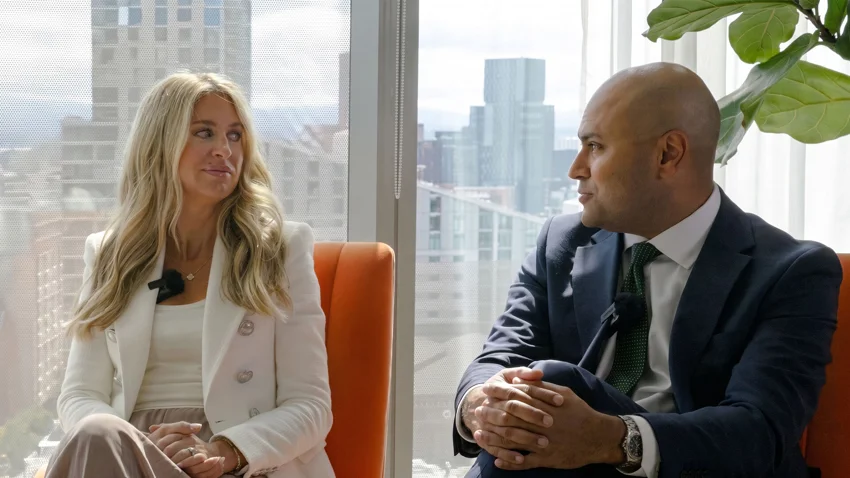
In this blog, we talk to two of our Client Advisors, Lisa Morrison and Zia Qureshi, who work closely with our female clients.
You work with women from a variety of backgrounds and life stages. What range of clients do you typically support?
Lisa
The women I work with include entrepreneurial business owners, senior professionals, and women who've built wealth through their careers, as well as those who've inherited wealth or are managing it following a life transition such as divorce or the loss of a partner.
Zia
My clients come from a range of backgrounds and wealth creation journeys, but there's definitely a strong theme of female founders. I also have a lot of clients in the corporate world, often women who've managed to get to very senior positions in male-dominated industries like construction.
Are there any common themes or priorities that often come through in conversations with women about their wealth?
Lisa
One of the strongest common themes is a desire for clarity and purpose. Women often want to understand not just what they have, but what it can do for them and their families. Interestingly, questions often focus less on "beating the market" and more on how to balance immediate needs with long-term goals.
Zia
I'd say there are two priorities that I've seen in my experience. One is that the female clients are more focused on holistic financial security over pure percentage performance. And the other is philanthropy.
Have you seen a shift in the role women are playing in wealth creation and wealth decision-making over recent years?
Lisa
Yes. More women are actively creating wealth through business ownership, leadership roles, and independent financial planning. Just as importantly, women are increasingly central to decision-making, whether that's within a partnership or on their own. There's a growing confidence and engagement, which is really exciting to see.
Zia
I think there have been two main shifts in our generation and the generation before. One is that the number of women who are wealth creators has massively increased. And the second is that more women are now the financial controllers in their families.
Do women tend to approach wealth management with different priorities depending on how their wealth has been created or transferred?
Lisa
The starting point of the conversation often reflects how the wealth was created. For example, an entrepreneur may be very focused on liquidity events and what comes next after an exit, whereas someone who has inherited wealth might be thinking more about preserving and stewarding it responsibly across generations.
Zia
In my experience, how wealth has been created or transferred can shape some of the priorities and questions clients have. But ultimately, every client's situation is different, and understanding what matters most to them is always the starting point.

One topic that often comes up is risk – there is often an assumption that women are more risk adverse. In your experience, how do women typically approach investment risk and financial decision-making?
Lisa
I think the idea that women are inherently more risk averse is a bit outdated. In my experience, it's less about avoiding risk and more about understanding it. Women often want a clearer framework, what does this mean for me, what are the trade-offs, and how does it support my goals?
Zia
I don't think that women are more risk averse. The female clients I've had have had to take real risks in their careers to get to where they are. But I think that sometimes feeds through to wanting to make more calculated risks with the wealth they've created. The conversation becomes less about risk in isolation, and more about alignment, making sure it fits their objectives, their timeline, and the outcomes they're working towards.
Are women increasingly looking to align their wealth with their wider values - whether that's family, philanthropy, legacy, sustainability, or supporting future generations?
Lisa
Absolutely. There's a strong desire among many women to ensure their wealth reflects their values, whether that's supporting their family, contributing to charitable causes, or investing more sustainably. Those wider goals play a big role in shaping the advice process.
Zia
It often is philanthropy and legacy that matters most and that often means that we can talk about lots of different areas of planning.
Many women are balancing multiple responsibilities - family, business, career, caring roles, or significant life changes. Does this shape the way you support them?
Lisa
Many women are managing multiple priorities. It's about providing structure and creating space for them to focus on what matters most, knowing their finances are in good hands.
Zia
Balancing multiple roles often means that time and mental bandwidth are incredibly valuable, so a key part of my role is simplifying complexity and helping create clarity.
Do women generally arrive highly financially informed, or is there still a perception gap around that?
Lisa
It really varies. Some women are highly financially informed and very engaged, while others may feel less confident, even if they're perfectly capable. There's sometimes a perception gap, where knowledge is underestimated, but once the conversation starts, that confidence builds quickly.
Zia
I don't think there's a true gap. I think that my female clients often want to have a deeper conversation about what we're proposing, and that actually makes our job a lot easier as we're having a truly collaborative discussion.
In your experience, do women typically have a preference for working with a male advisor, a female advisor, or is it more about the individual and the quality of the relationship?
Lisa
In my experience, it's much less about gender and much more about trust, understanding, and the quality of the relationship. Clients want someone who listens, communicates clearly, and understands their goals.
Zia
I think choosing the right professional advisor is a very personal thing, and there are lots of considerations including whether you can connect with that person.
What kinds of situations tend to prompt women to seek advice or a second perspective on their wealth?
Lisa
Often it's a moment of change, such as receiving an inheritance or going through a divorce. Sometimes it's simply reaching a point where they want a second opinion or want to feel more organised and in control.
Zia
There are a multitude of situations but my advice is always to start early, if you're approaching a business exit or about to get promoted, then the sooner you engage an advisor, the better.
For women who may be at an earlier stage of engaging with a wealth manager - perhaps considering it for the first time - what advice would you give them?
Lisa
Don't wait until you feel like you "know everything" to start the conversation. A good wealth manager's role is to meet you where you are, help you build understanding, and guide you step by step. The earlier you engage, the more opportunities you create for yourself.
Zia
I'd encourage them to ask questions, challenge and probe their advisor. I think that leads to the best outcomes.
Finally, what excites you most about bringing females together in our Beyond Value community?
Lisa
What excites me most is the opportunity to bring women together in a supportive, collaborative environment. It's about helping build confidence and empowering women to take control of their financial futures. There's real power in community, and I think this initiative has the potential to make a meaningful difference.
Zia
One thing I've noticed is that many women are asking similar questions, even if their circumstances are completely different. Bringing people together to share experiences, ideas and perspectives feels like a really positive thing. I'm excited to see the conversations that come from that and the connections that are made along the way.
Join our network
Whatever your wealth journey looks like, Beyond Value is a place to connect, learn and share experiences with a community of inspiring women. Be part of a network that supports your ambitions and sparks new possibilities. Find out more about Beyond Value and join us today.
Important Information
Information correct as of 11 August 2026.
This document is designed as marketing material. This document has been composed by Brown Shipley & Co Ltd ("Brown Shipley”). Brown Shipley is authorised by the Prudential Regulation Authority and regulated by the Financial Conduct Authority and the Prudential Regulation Authority. Registered in England and Wales No. 398426. Registered Office: 2 Moorgate, London, EC2R 6AG.
This document is for information purposes only, does not constitute individual (investment or tax) advice and investment decisions must not be based merely on this document. Whenever this document mentions a product, service or advice, it should be considered only as an indication or summary and cannot be seen as complete or fully accurate. All (investment or tax) decisions based on this information are at your own expense and at your own risk. You should (have) assess(ed) whether the product or service is suitable for your situation. Brown Shipley and its employees cannot be held liable for any loss or damage arising out of the use of (any part of) this document.
The contents of this document are based on publicly available information and/or sources which we deem trustworthy. Although reasonable care has been employed to publish data and information as truthfully and correctly as possible, we cannot accept any liability for the contents of this document, as far as it is based on those sources.
Investing involves risks and the value of investments may go up or down. Past performance is no indication of future performance. Currency fluctuations may influence your returns.
The information included is subject to change and Brown Shipley has no obligation after the date of publication of the text to update or amend the information accordingly. Accordingly, this material may have already been updated, modified, amended and/or supplemented by the time you receive or access it.
This is non-independent research, and it has not been prepared in accordance with legal requirements designed to promote the independence of investment research and is not subject to any prohibition on dealing ahead of the dissemination of investment research.
All copyrights and trademarks regarding this document are held by Brown Shipley, unless expressly stated otherwise. You are not allowed to copy, duplicate in any form or redistribute or use in any way the contents of this document, completely or partially, without the prior explicit and written approval of Brown Shipley. Notwithstanding anything herein to the contrary, and except as required to enable compliance with applicable securities law. See the privacy notice on our website for how your personal data is used (https://brownshipley.com/en-gb/privacy-and-cookie-policy).